If William Shakespeare could say that a rose by any other name is still a rose,1 then it might not be far from the truth for us to say that a cloud by any other name is still a cloud. Shakespeare’s adage is used to imply that the names of things do not necessarily affect what they really are.
Is it possible that when boiled down to its essential core – whether it’s a private cloud, a public cloud, a hybrid cloud, or a multi-cloud environment – it is undeniably still a cloud? Of course, it’s possible. But that doesn’t negate the differences among those four types of clouds.
Let’s first look at how they differ. And then, we’ll look at the pros and cons of choosing a public cloud for your company.
Private, Public, Multi-Cloud, and Hybrid Clouds
What’s the difference between multi-cloud and hybrid cloud computing?
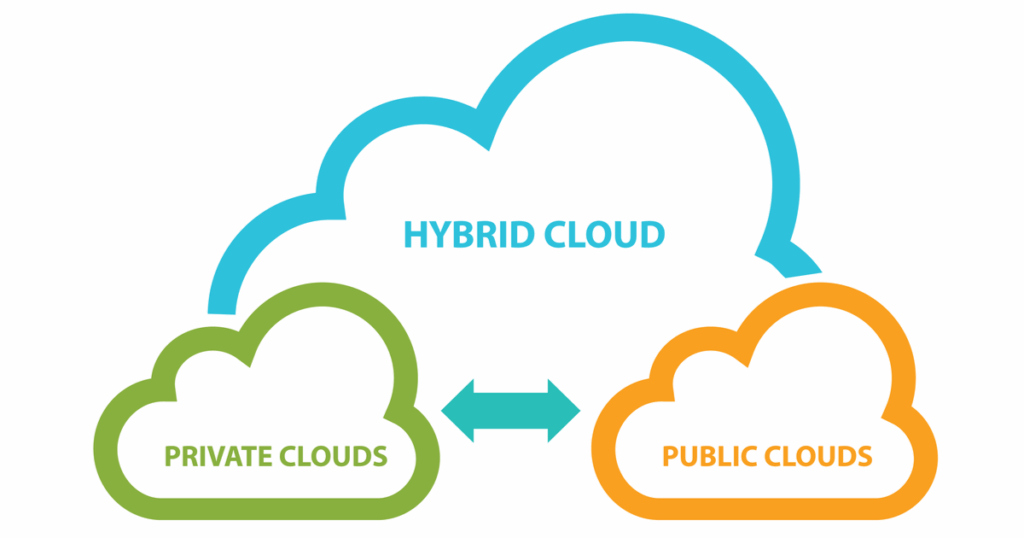
Both “multi-cloud” and “hybrid cloud” refer to cloud deployments that integrate more than one cloud. However, they differ in the kinds of cloud infrastructure they include. A hybrid cloud infrastructure blends two or more different types of clouds (such as a public cloud and a private cloud), while a multi-cloud environment includes several clouds of the same type.
A good analogy would be that a hybrid cloud is like combining apples and oranges, while multi-cloud is like combining different types of apples (such as macs and empires).
What are the fundamental differences between a private cloud and a public cloud?

A private cloud is a cloud service that is not shared with any other organization. The private cloud users have the cloud to themselves. By contrast, a public cloud is a cloud service that shares computing services among different customers, even though each customer’s data and applications running in the cloud remain hidden from other cloud customers.
A good analogy would be that a public cloud is like renting an apartment, while a private cloud is like renting a house. The house is more private, but it also typically costs more to rent. Also, maintenance of an apartment is generally handled by the building supervisor, whereas it’s harder to get a contractor out to fix a problem in your house. Sometimes, the tenant in a house may be responsible for their own maintenance.
Considerations for Choosing a Public Cloud
Public clouds are the most common type of cloud computing deployment. The cloud resources (like servers and storage) are owned and operated by a third-party cloud service provider and delivered over the internet. With a public cloud, all hardware, software, and other supporting infrastructure are owned and managed by the cloud provider. You can securely access services and manage your account using a web browser.
Advantages of public clouds:
- Lower Costs – No need to purchase hardware or software. You pay only for the services you use.
- No Maintenance – Your cloud service provider takes care of the maintenance.
- Near-unlimited Scalability – On-demand resources are available to meet your current and future business needs.
- High Reliability – A vast network of servers worldwide ensures against failure.
- High-Level Security – Cutting-edge security provided by elite teams of cyber experts monitoring potential threats 24/7.
Microsoft Azure is an excellent example of a public cloud.
Is a Public Cloud Right for You?
We are here to assist you as you weigh your cloud options. Just contact Liberty Grove Software. Call 630-858-7388 or email us at nav@libertygrove.com.
1The actual quote from Romeo and Juliet is: “A rose by any other name would smell as sweet.”